


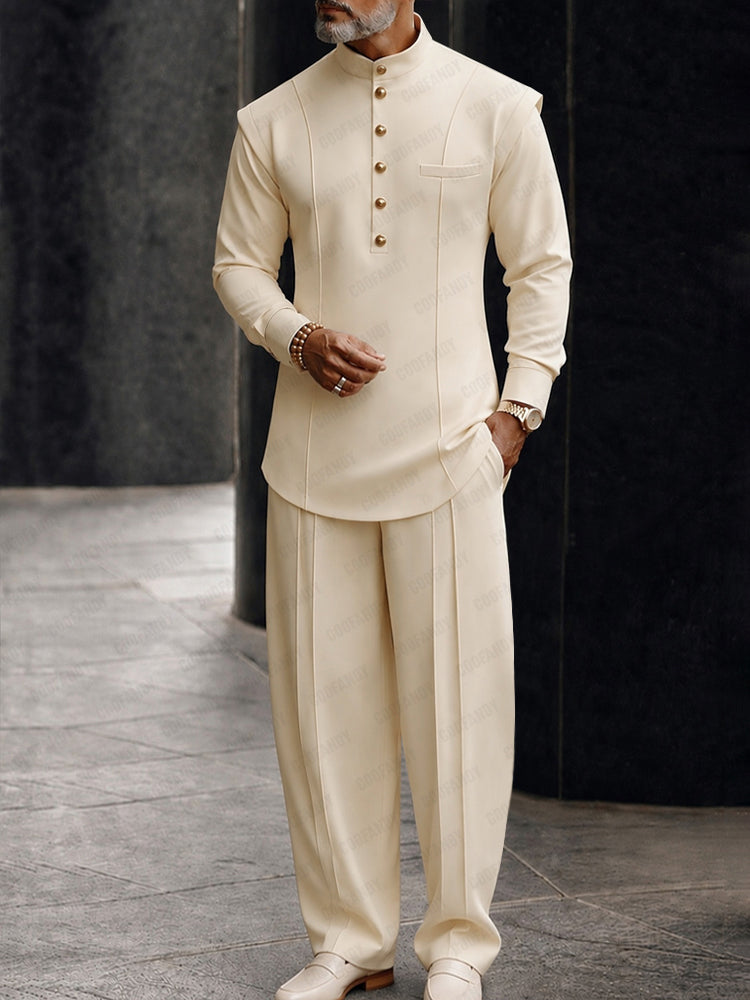


How to Check Shirt and Blazer Fit Together

Check a shirt and blazer in three stages: wear the shirt alone, add the blazer without changing how the shirt is styled, then sit and reach before looking at both again. If pulling or bunching appears only when you add the jacket, compare another pairing one layer at a time. Buying a larger size immediately can introduce a new problem without explaining the first one.
Two garments that look right separately may not work as well together. The shirt adds fabric beneath the jacket, while the jacket changes how the collar, sleeves, and hem are seen. This check is for a collared shirt under a blazer, not a rule that every outfit needs a jacket or a slim-fitting shirt.
Start With the Shirt You Will Actually Wear
Use the trousers, undershirt, and watch you intend to wear with the outfit. Button the cuffs, arrange the collar as you normally would, and tuck the shirt if that is your plan. Do not replace it with a thinner shirt just to make the jacket seem comfortable; that tests a different outfit.
Before adding the blazer, stand with your arms relaxed, sit down, and reach forward at desk height. Note where you already feel a restriction. Does the shirt pull across the upper back? Does the front separate between buttons? Does a cuff catch against your wrist when you bend your arm? The point is to establish what happens without the jacket.
Smooth a twisted sleeve or a badly arranged tuck once, then repeat the movement. If the same problem returns while wearing the shirt alone, investigate that shirt's fit or styling first. A jacket might conceal the wrinkle, but it does not remove the restriction beneath it. Keep this baseline in mind when checking the two layers together.
Check the Jacket Without Hiding the Shirt Problem
Put on the blazer and let both layers settle before fastening it. Look at the shoulders and upper arms with your hands at your sides. Notice whether the shirt sleeve has folded or gathered under the jacket, especially around the upper arm and underarm. Smooth an obvious fold gently, then see whether it comes back during ordinary movement.
For a single-breasted blazer, test the fastening you would normally use while standing; do not close every button merely because it is there. The front should close without a tug-of-war, and you should still be able to breathe normally. Pulling around the fastening, lapels pushed away from the chest, or uncomfortable pressure are reasons to compare the cut and available room. One wrinkle is not enough to identify a single cause.
Now compare with your shirt-alone baseline. If the shirt felt easy but the pair restricts your upper arms, try the same shirt under another jacket, if you have one. If the blazer feels comfortable over a different shirt, the original pairing may be the issue. Shoulder shape, armhole position, sleeve room, and the underlayer can interact; the size letter alone cannot tell you which change will help.
Read the Collars, Cuffs and Hem as a Pair
At the back of your neck, distinguish the shirt collar from the jacket collar. Turn your head gently and look again. Is the shirt collar itself tight, or is the jacket collar standing away from the shirt? Does the problem appear before the jacket goes on? That comparison is more useful than repeatedly pulling both collars into place for a photograph.
At the front, style the shirt neckline as you plan to wear it. For an open collar, see whether the points settle inside the jacket opening or repeatedly catch on the lapels. There is no need to force every collar into one arrangement. Try another shirt collar with the same blazer if the combination keeps folding or shifting. If you intend to wear a tie, test the closed collar and tie too; an open-neck check does not show how that outfit will behave.

Look at the cuffs with your arms relaxed, then bend your elbows. A little visible shirt cuff is a common tailored preference, not the only measure of fit. If one cuff disappears, check that the shirt sleeve is straight and the cuff closure works with your wrist or watch before assuming that the blazer sleeve needs shortening. Compare both sides, but do not force perfect symmetry if your posture or wrist accessories differ.
Finally, check the shirt hem with the jacket open. A tucked shirt should not form a thick roll above the waistband that distorts the front. For an intentional untucked look, view the pair from the side as well as the front; decide whether the visible hem suits the setting and jacket length. Do not hide an unwanted hem by keeping the jacket buttoned all evening.
Sit, Reach and Let Both Layers Settle
Unbutton a single-breasted blazer before sitting, then sit as you would at dinner or at your desk. Reach for something at table height, bend your elbows, and turn your head. Use movements you expect from the day rather than overhead stretches designed to test sportswear. Stop if the clothing feels painfully tight or a seam is under obvious strain.

Stand again and let your arms return to your sides. Watch what resets and what does not. Some fabric movement is normal. A shirt that stays bunched at the waist, a cuff trapped inside the jacket sleeve, or a collar that repeatedly shifts may need a different pairing or adjustment. Check whether the same symptom appears without the blazer before assigning it to the outer layer.
A pair that looks tidy only after constant smoothing may be inconvenient for a long meeting or dinner. Repeat the short sequence after one adjustment. If it still needs attention every time, compare another combination rather than accepting a still mirror view as proof that it works.
Change One Layer Before Changing the Size
Keep one garment and its styling unchanged while you replace the other. You are looking for a useful comparison, not a guaranteed diagnosis:
| What you notice | What to compare next |
|---|---|
| Pulling already occurs in the shirt alone | Another shirt cut or size, with the same trousers and styling |
| Upper-body pressure begins after adding the blazer | The same shirt under a different jacket |
| The blazer works with another shirt but not this one | The two shirts' sleeve volume, collar behavior, and tuck |
| Cuff visibility changes repeatedly after moving | Straightened shirt sleeves and cuff closures before jacket sleeve alterations |
| The front or back stays distorted at rest | Another jacket cut with the same shirt, then qualified fitting advice |
Changing size affects more than the troublesome area. A larger jacket might add chest room while changing the shoulders and sleeves too. If one cut works better in your comparison, use its relevant measurements as a reference; distinguish body measurements from finished garment measurements before comparing charts. Ask a tailor about a proposed adjustment before buying or cutting anything, because what is possible depends on the construction and available fabric.
Try our Casual Suit Jackets (US Only) with the shirt you plan to wear, then repeat the standing, sitting and reaching checks before choosing a size.
COOFANDY Signature's focus on fabric, fit, and finishing details makes the interaction between layers a useful question to bring to the collection. Explore the direction of COOFANDY's premium menswear collection through the COOFANDY Signature page, then use the COOFANDY Signature collection to browse individual listings when available. A collection name cannot establish that two garments fit together. Test the pairing with your actual clothes, and keep the combination that works while you move as well as while you stand.
FAQ
Should I buy a larger blazer to fit over a shirt?
Not automatically. Compare the shirt alone with the same shirt under the blazer, then try another jacket cut if possible. A larger size may add room in one area while changing the shoulders, sleeves, and length. Use the relevant size information and the actual pairing, not a blanket sizing rule.
How much shirt cuff should show below a blazer?
A little visible cuff is a common styling preference, but there is no single amount that proves the pair fits. First check the shirt sleeve and cuff with your arms relaxed and bent, then assess the jacket sleeve. Your watch, posture, and intended look can affect the result.
Can a tailor fix a shirt and blazer that do not work together?
Sometimes, but not every issue is a simple alteration. The construction, seam allowances, and location of the problem affect what is possible. Ask a tailor to assess the actual garments before assuming that a collar, shoulder, or sleeve adjustment will solve the pairing.

Lascia un commento