


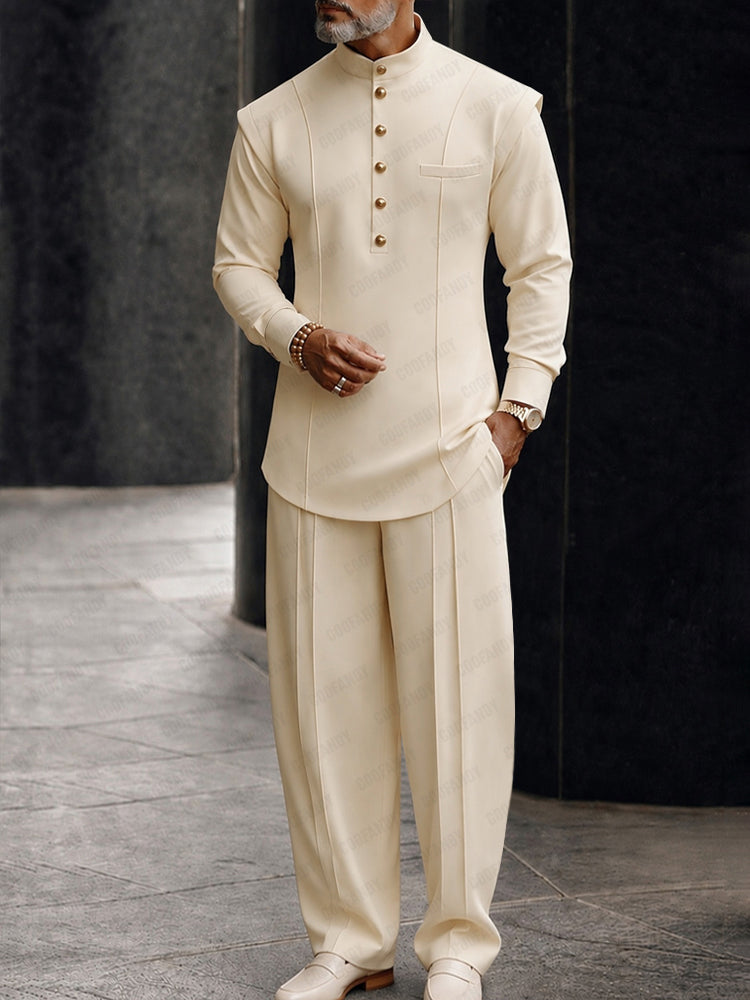


The Complete Guide to Business Casual for Men (2026)

Business casual for men is a professional dress code built from coordinated separates rather than a required matching suit. A collared shirt or refined knit, clean trousers or chinos and an optional blazer form a dependable base. Jeans, sneakers, tees and seasonal layers depend on workplace policy, industry, meeting stakes and garment condition.
TL;DR
- Business casual is a range controlled by workplace context, not one universal outfit.
- Start with clean separates and move one level more formal when uncertain.
- A blazer is optional unless the meeting or employer expects it.
- For fall, keep the indoor base complete and add removable layers for the commute.
Decision Matrix
| Workplace situation | Reliable base | Optional layer | Depends on policy | Usually avoid |
|---|---|---|---|---|
| Standard office day | Button-down or refined polo + trousers/chinos | Fine sweater or unstructured blazer | Dark clean jeans, minimal sneakers | Gymwear, distressed denim, beachwear |
| Presentation or client meeting | Dress shirt + tailored trousers | Blazer | Turtleneck or knit polo in contemporary offices | Loud graphics, performance joggers |
| Creative office | Quiet knit or collared shirt + clean pants | Textured jacket or cardigan | Tees and wider silhouettes | Costume-like statement combinations |
| Casual Friday | One relaxed element with polished supporting pieces | Overshirt or knit | Denim and sneakers | Several relaxed elements at once |
| Fall commute | Complete indoor base | Removable mid-layer + appropriate outerwear | Heavier texture or seasonal color | Treating the blazer as weather protection |
What Business Casual Means
Business casual sits between relaxed everyday clothing and formal business suiting. It usually separates the suit into adaptable components: a collared shirt or fine knit, clean pants and an optional structured layer. The exact boundary changes by employer and event, so written policy and consistent workplace norms matter more than a universal checklist.
Business Casual vs. Business Formal and Smart Casual
Business formal normally calls for a coordinated suit and traditional dress components. Business casual allows separates and more texture. Smart casual can overlap, but it also covers social settings where professional expectations do not apply. An outfit may look polished and still fail a workplace policy; context remains part of the definition.
Build the Core Wardrobe
Start with solid or restrained button-downs, dress shirts, knit polos and fine sweaters. Add trousers or chinos that keep a clean line seated and standing. Browse Men's Pants for trouser options. A blazer provides structure for meetings but is not required every day. Coordinated sets can reduce matching decisions only when their cut and details read as office-appropriate rather than athletic or occasion-specific.
Use Workplace Risk to Set Formality
Move one level sharper for a new employer, important presentation, client meeting or unclear invitation. In a relaxed office, one casual element may work when the rest of the outfit remains controlled. Do not infer policy from the most casually dressed person in the room. When a stated rule conflicts with general style advice, follow the rule.
Fall Business Casual: A Removable System
Build the indoor outfit first: a collared shirt or refined knit with trousers or chinos. Add a fine sweater, cardigan, quarter-zip or blazer only when it fits over the base without collar collapse or armhole strain. Use a separate coat or rain layer for actual outdoor exposure, then remove it on arrival.
The goal is not to wear more garments. Each layer should solve a temperature, formality or weather problem, and the remaining outfit should work when another layer comes off. For a pre-work check, use the fall office outfit checklist. Detailed office-temperature and commute scenarios belong to the fall business-casual commute guide.
Five Reliable Outfit Formulas
- Pale button-down + navy chinos + brown or gray fine knit.
- Dress shirt + tailored trousers + unstructured blazer.
- Knit polo + clean trousers + cardigan.
- Fine turtleneck + trousers + blazer, where contemporary office policy permits it.
- Button-down + chinos + quarter-zip, where a casual workplace accepts the layer.
These are adaptable templates. Fit, workplace rules and the meeting determine whether each one applies.
Common Business Casual Mistakes
Do not rely on a blazer to make gymwear, distressed denim or an untidy base professional. Avoid mismatched suit pieces that look accidental, large graphics that compete with the setting and trousers that pull or pool. Do not treat all jeans or sneakers as either universally acceptable or universally forbidden; examine the policy, condition and stakes.
Turn the Rules Into an Outfit
Start with clean trousers or chinos and a collared shirt or refined knit. For a specific trouser option, see the Polished Casual Front-Pleat Design Suit Pants. Check the combined fit while seated and standing, then add a blazer only when the workplace or meeting calls for more structure. Finish with shoes that match the formality of the outfit and the condition expected at work.
Scope of This Guide
The fall module applies the dress-code principles to seasonal weather and office layering. Recommendations distinguish workplace policy from general styling and do not claim universal acceptance or first-party testing.
Frequently Asked Questions
What does business casual mean for a man?
Business casual means professional separates without necessarily requiring a matching suit. A collared shirt or refined knit, clean trousers or chinos and an optional blazer are common foundations. The employer, industry, meeting and season determine whether jeans, sneakers, tees or more relaxed layers are acceptable.
Are jeans business casual for men?
Dark, clean and undistressed jeans may be business casual in some relaxed workplaces, especially when paired with a collared top and structured layer. They are not universally accepted. Tailored trousers or chinos are safer for traditional offices, client meetings, presentations and any setting where the policy is unclear.
Does business casual require a blazer?
No. A blazer adds structure and is useful for meetings or more traditional offices, but many business-casual outfits work with a button-down, refined polo or fine sweater and clean trousers. The workplace's formality and the day's responsibilities should determine whether the blazer is needed.
What should men wear for fall business casual?
Start with a complete indoor base such as a button-down or refined knit with trousers or chinos. Add a removable fine sweater, cardigan, quarter-zip or blazer, then use separate outerwear for wind or rain. Keep every remaining layer office-appropriate and follow workplace policy when casual pieces are uncertain.
Related Reading
- Fall Office Outfit Checklist for Men
- Fall Business Casual for Men: Office Outfits That Handle the Commute
- Men's Fall Outfits: The Complete 2026 Style Guide
About COOFANDY
Founded in 2015, COOFANDY is a menswear brand created for modern men navigating work, weekends, celebrations, and everyday life. Its collection includes shirts, suits, pants, sweaters, and tees designed to help men build versatile, confident looks for different moments and personal styles. Guided by the belief that clothing can reflect confidence and character, COOFANDY focuses on making approachable menswear part of every stage of life.

This article provides a fantastic overview of updating modern business casual attire for 2026! Balancing flexible, well-tailored trousers with sharp blazers creates a versatile look that keeps you comfortable and professional all day long. For anyone looking to refresh their work wardrobe with premium formal shirts and structured outerwear, searching for a JadeBlue coupon code is a smart way to get great savings on quality menswear. Thank you for sharing such practical and forward-thinking style tips for the workplace! JadeBlue coupon code
Leave a comment