Your go-to resource for men's fashion advice - from hnding the perfect business casual pants to building a versatile wardrobe
without overspending.
Every guide is based on real wear-testing, honest comparisons, and practical tips for modern men who want to look sharp at
work, events, and everyday life.
Your go-to resource for men's fashion advice - from hnding the perfect business casual pants to building a versatile wardrobe without overspending.
Every guide is based on real wear-testing, honest comparisons, and practical tips for modern men who want to look sharp at
work, events, and everyday life.
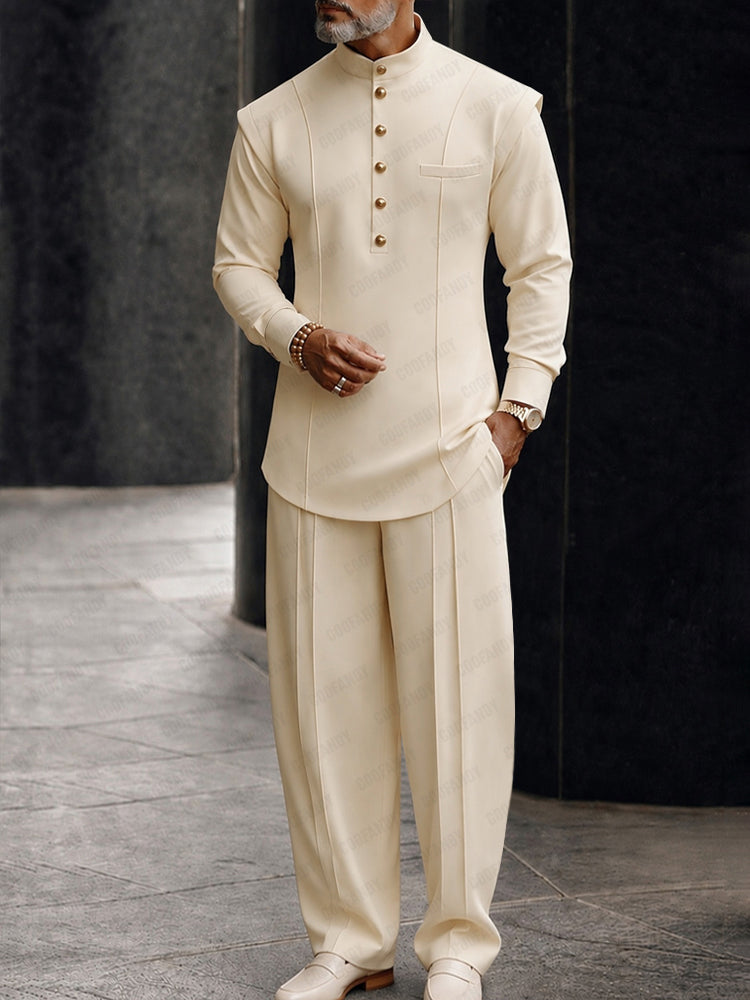
If picking vacation outfits stresses you out, matching 2-piece sets are the cheat code. Pre-coordinated, zero styling required. Here are the best options under $60.
Choose a men's fall interview outfit by employer formality, interview format and weather, with clear options for shirts, pants, blazers and outer layers.
Layer a crewneck sweatshirt or hoodie under a jacket by matching weight, controlling hood and hem bulk, and keeping the casual outfit's proportions clear.
Layer a men's quarter-zip over T-shirts, polos or button-ups with practical zipper, collar, fit, weight and trouser rules for casual and office settings.
A practical men's fall capsule wardrobe can work with 10 clothing pieces: three bases, three knits, two pairs of pants, one overshirt and one jacket. The key is not the number alone. Every top must work with both pants, and each layer must fit over at least two bases. The system below produces 30 distinct outfits without counting shoes or accessories as separate pieces.
When you do not know what to wear in fall, use a four-part formula: pants that match the occasion, a base layer that works indoors, one removable warm layer, and footwear at the same formality level. The 12 combinations below cover mild weekends, cool commutes, casual offices, dinners and outdoor plans without requiring a separate wardrobe for each.
Short answer: Choose men’s casual shirts by where the fit fails, not by a body-type label alone. Locate pulling, excess cloth or the wrong length, then compare the relevant measurements. A shirt should let you sit and reach before you decide whether you like its outline.
Short answer: Choose 100% linen if linen fiber content is non-negotiable; rule out blends on that basis. Otherwise, choose the specific shirt whose closure, cut, measurements and care routine meet your needs. This guide does not establish a winner for airflow or wrinkle recovery.
Before you add anything to your cart, look at the week ahead and build a compact campus wardrobe around the classes, events, and everyday plans you actually have.
Before buying more T-shirts, use this quick check to see whether your closet needs more tees, a Smart Casual option, or a better plan for travel and events.
Build a practical men’s campus wardrobe with shirts, pants, layers, matching sets, and five outfit formulas for class, presentations, events, and dates.
Good back to school outfits should make the day easier. Dress for the 8 a.m. lecture, the walk across campus, the chilly classroom, and whatever happens afterward. A few shirts, pants, sets, and light layers can cover the week without filling your closet.
Seven neutral game-day outfits for men who would rather skip the jersey, with practical ideas for stadiums, sports bars, hot weather, and dinner afterward.
Learn how to wear team colors without a jersey using one team color and two neutrals, with 7 men's outfits for bars, watch parties, dates, and outdoor games.
Choose linen pants for visible texture and a relaxed summer look. Choose cotton-linen when you want a similar seasonal feel with more everyday structure. Treat performance-oriented pants as a broad category label when a smoother-looking pair suits your commute-heavy or active routine. None wins every summer plan. The right call comes down to the setting, the silhouette you like, and the care you are willing to build into your week. This summer-pants guide starts from the same question. In this coofindy.comparison, we stay with styling and care rather than ranking products.
Summer pants solve a familiar problem: you want more coverage than shorts without looking overdressed. Start with where you are going, how formal the plan is, and what you will wear on top. Relaxed trousers make sense for travel and weekends; a cleaner straight-leg pair often works better for the office or dinner. Use the occasion, waistband, and overall silhouette to narrow the choice. This summer-pants guide uses similar filters, but they only help once you look at the plans on your own calendar.
Summer office dressing is about feeling lighter without dropping the standard of the room. Start with a clean shirt, trousers that match the dress code, and shoes that make sense for the clients or colleagues you will meet. A polo, short-sleeve button-down, or lightweight long-sleeve shirt can all work when the fit is tidy. The outfit for a long commute, an air-conditioned office, and a client lunch needs to hold together across all three. This cooling-clothes guide addresses the pull between outdoor heat and indoor comfort. In this COOFANDY guide, we focus on remaining office-appropriate through both.
For a hot-weather trip, plan around the places you will actually go: the airport, a long walking day, a pool stop, a museum, and dinner. These six looks share a few compatible pieces without turning the trip into a packing-system exercise. This related summer-style guide considers heat-focused clothing. In our COOFANDY guide, we focus on complete looks for the changing parts of a trip.
No single garment solves a hot day. A workable summer outfit starts with three things: a fabric weight that suits the plan, enough room to move, and no layer that is there only for show. For an easy Saturday, that might be a light shirt and shorts. For a travel day or dinner reservation, a lightweight shirt, clean trousers, and simple shoes usually make more sense. The aim is not to buy a “cooling” item; it is to dress appropriately from the first errand through the last plan. This cooling-clothes guide looks at the garment side of that question. In this COOFANDY guide, we focus on making the whole outfit work.
A short-sleeve button-down can change the tone of an outfit quickly. Left open over a tee, it keeps a travel or beach look relaxed. Buttoned with trousers, the same kind of shirt has enough shape for dinner. Warm-weather wardrobe coverage includes short-sleeve shirts in its seasonal roundup; this guide focuses on what makes one look considered once it is paired with the rest of the outfit.
Hot, humid days are easiest to dress for when you plan around the moments that make you change your mind: the walk to work, a cold restaurant, an afternoon outside, or dinner after you have already been out for hours. Pick a base outfit that works for the longest stretch, then make one adjustment for the next setting instead of piling on extra pieces. In this COOFANDY guide, the focus is on making a few everyday clothes work across a humid day.
To move from the beach or pool to a casual meal, put on a dry top, choose footwear for the venue, and treat swim trunks as the starting point rather than the finished outfit. An open button-front shirt is often enough for an informal stop. For a more polished setting, change into lightweight trousers or cleaner shorts. The question is how much coverage you need, whether the trunks are dry, and whether dinner really is casual. When summer swimwear roundups turn a poolside purchase into a vacation plan, remember that swimwear handles the water; a dry change handles everything after it.
For a five-day hot-weather trip, a packing list is more useful than five preplanned looks. Take three shirts, one tee, two standalone bottoms, one coordinated set, one light layer, and two pairs of shoes, then assign each item more than one job. That leaves room for swimwear, toiletries, and the things a real itinerary adds at the last minute. Check the itinerary before adding anything new; the useful purchase is the one that fills a real gap.
Before buying for summer, pull out the pieces you reached for last year. The gaps are usually clearer than a shopping list: perhaps you need a shirt that works with both shorts and trousers, or a neater bottom for dinner plans. Start with two light shirts, one or two tees, shorts, trousers, and a coordinated set only if you would wear its pieces separately. Think in outfits, not shopping categories: each new piece should work with what is already in the closet. When seasonal shopping roundups, such as this Yahoo fashion overview, put a refresh on the agenda, look for the missing link in your rotation instead of another outfit that only works once.
Most dress-shirt fixes are small. Before: the collar is twisted, the hem is caught above the waistband, and the shoes belong to a different plan. After: the collar lies flat, the hem has a clear finish, and the outfit reads as one thing. You do not need a new collection of accessories to make that change. For fabric, start with the exact garment's listed composition and care directions, then judge how the shirt looks after a normal sit and stand. No fabric label alone makes a shirt look polished. Look at the shirt where people will see it: around the face, across the shoulders, at the cuffs, and where it meets the trousers. Then make one adjustment at a time. The difference often shows up before you leave the mirror.
Business casual gets easier once you stop treating the office as one room. A quiet morning at your own desk, a presentation in a conference room, a first meeting with a new client, and lunch with senior leadership may all appear on the same calendar. They do not ask the same thing of a shirt. A polo can be a good choice for the right workday. A button-down can make a more visible moment feel straightforward before anyone says hello. The useful question is not which shirt is more professional in the abstract. It is which one belongs in the next room you are about to enter.
A polo is often decided in the fitting room by details that disappear in a product thumbnail. Choose the fit that sits cleanly at the shoulders and body, keep the collar flat after you move, and reserve the polo for plans that genuinely welcome a relaxed collared shirt. Does the hem look right over the trousers you already own? A polo can look promising alone and feel oddly unfinished once the shoes enter the picture. This is less about sorting polos into rigid occasions than about seeing what happens when you wear one for a real plan. Try it for the coffee run, then sit in it. Pair it with the trousers you would wear to a casual lunch, then stand a few steps from the mirror. Small observations make the choice much clearer.
A summer workday may begin with a walk to transit and end at a client lunch, but the clothes need not change at every stop. Picture a Tuesday with a morning meeting, desk time, and a 5:30 p.m. client conversation near the office. What should you wear from home to avoid managing clothes all day? Choose client-ready business casual and plan for the commute. A collared shirt, trousers for walking shoes, and one bag item may be enough.
At 8 a.m., the day may feel simple: a walk from the parking lot, coffee in one hand, backpack over one shoulder. By evening, the same schedule can include a lab, a library table, dinner with friends, and a club meeting. Late-summer campus dressing works when the outfit still looks considered after all of that. Build it around the full day, then carry one piece that has a real purpose rather than turning the bag into a spare closet.
A college career fair outfit should start with the employer, not a one-size-fits-all dress rule: research each priority employer's fair guidance, recruiting materials, and role, then choose the corresponding level of polish. For mixed or unclear signals, wear restrained business casual: a clean collared shirt, neat pants, and tidy shoes. That base stays orderly while you queue with a folder, offer a resume, sit with a representative, and move to the next table.
Dress-shirt care in a college dorm is mostly a timing problem. The shirt is fine on Sunday, then a presentation appears on the calendar for Tuesday morning. On Monday night, every washer is busy, somebody's clothes are sitting in a dryer, and your only clean hanger is holding a hoodie. A simple routine gives you more options than a rushed fix at 7:30 a.m. Look at the garment's instructions before washing, drying, pressing, or treating it. Different shirts can call for different handling even when they appear similar on a hanger. Then work backward from the day you need the shirt. Give yourself time to inspect it, care for it as directed, and choose a clean backup if the first choice is not ready.
A college club leader needs clothes that can keep up with the less visible parts of the role. You might unlock a classroom, drag two tables together, hand out name tags, welcome a nervous first-year student, and then introduce a faculty guest. The outfit does not need to announce that you are in charge. It should make you look prepared while leaving you free to do the practical work. For most campus organizations, that means a clean collared shirt or polo, neutral pants, and shoes that are tidy enough for the room but comfortable enough for the walk there. Formality should come from the event, not from the word "leadership" printed on your position title.
Smart casual on campus is less about memorizing a definition than noticing when an ordinary day changes shape. A lecture, a club meeting, and a presentation can all happen before dinner. The same jeans-and-hoodie default may feel fine in the first room and slightly careless in the last one. Clean, intentional clothes give you room to move between those settings without arriving in something that looks borrowed from an interview. The useful question is not, "Is this smart casual?" Ask what you are doing and who is seeing you do it. A student who is taking notes in the back of class has different clothing needs from the student introducing a guest speaker or presenting a group project.
Discover new arrivals, exclusive offers, and much more
BE THE FIRST TO KNOW
BE THE FIRST TO KNOW
Confirm your age
Are you 18 years old or older?
Come back when you're older
Sorry, the content of this store can't be seen by a younger audience. Come back when you're older.




 Track Order
Membership
Track Order
Membership


